Blog / Health
The Nervous System After Stress
Chronic stress does not merely exhaust the body — it teaches it a set of habits that persist long after the original stressor has gone.
Daniel Jennings · January 8, 2026
The model most people carry about stress is a hydraulic one: pressure builds, pressure releases, the system returns to baseline. It is a plausible model for acute stress — a near-miss on the highway, a difficult conversation, the hour before a deadline. The nervous system activates, cortisol rises, the body prepares for action, and once the event is over, the system dials back down. That arc is real, and it is recoverable.
Chronic stress does not follow that arc. What sustained, long-duration stress does to the nervous system is not fill a tank past capacity. It trains the system. The nervous system is a pattern-recognition machine, and one of the things it learns with exceptional efficiency is threat. When threat is present at a low level for long enough, the system recalibrates its baseline — not back to the pre-stress state but to a new, higher-alert posture. This is not dysfunction. It is an adaptive response to an environment that has been reliably dangerous. The problem is that the response persists after the environment changes.
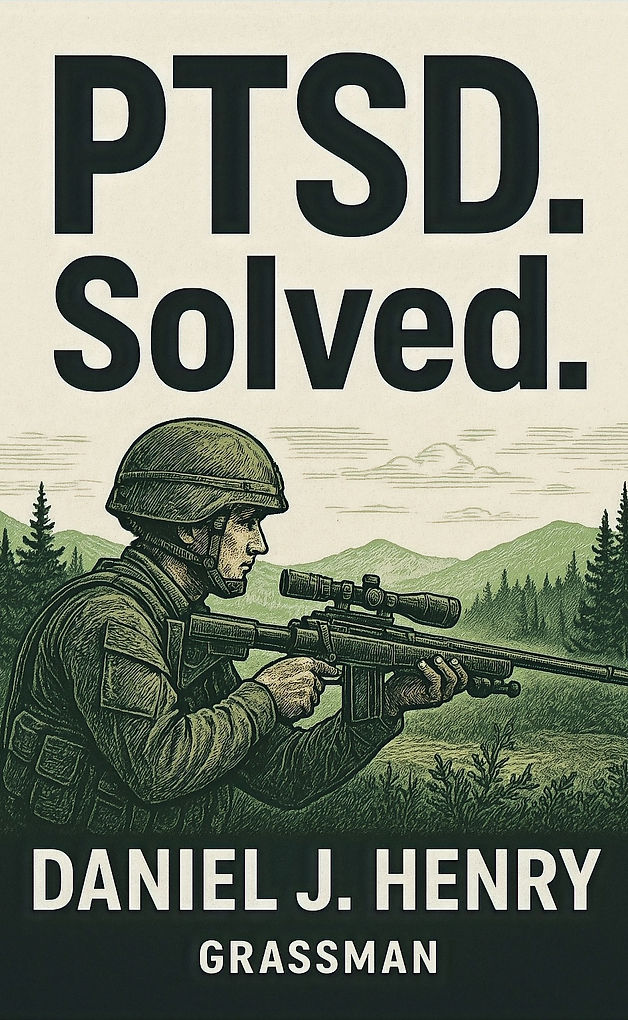
This is the core clinical insight behind the work GrassMan's health titles are engaging with: that post-traumatic presentations are not primarily memory problems. They are nervous system posture problems. The events are not the issue; the learned state is. The person who is startling at ordinary sounds, whose attention is organised around the detection of threat, whose body is chronically braced — that person's nervous system is not broken. It is doing exactly what a nervous system should do after a long period of genuine danger. It just has not received the information that the danger has passed.
The treatment implication is significant. Interventions that work at the level of narrative — talk therapy, re-storying, cognitive restructuring — are useful, but they operate on a different system than the one that has been trained. Language is cortical; the brace is subcortical. The newer body-based modalities work precisely because they speak the correct language: they work at the level of the nervous system's actual operating layer rather than the layer above it. The books the press is publishing in this space are trying to make that distinction legible to ordinary readers — not as a technical argument but as something a person can actually use.
Related titles from this theme
Health.
Catalog titles curated into the same theme bucket on /reading-lists.

Keep reading
More from the press.
Return to the blog for more editorial essays, or enter the catalog.